In the news
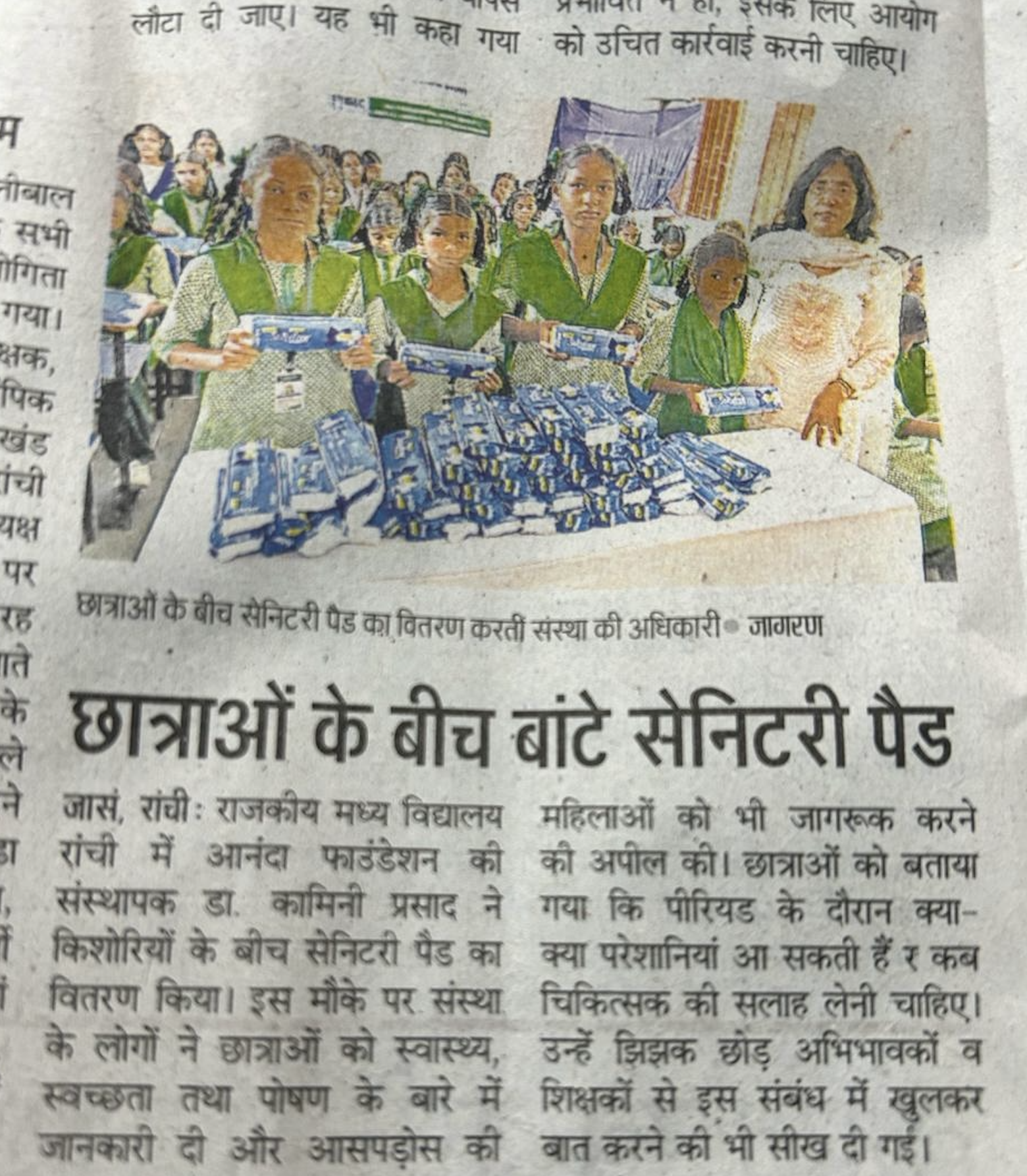
छात्राओं के बीच बांटे सेनिटरी पैड
Dainik Jagran — one of India's largest-circulation Hindi newspapers — covered Ananda Foundation's menstrual health outreach program at Rajkiya Madhya Vidyalaya in Ranchi.
The article reported on Dr. Kamini Prasad, the foundation's founder and health expert, distributing sanitary pads to adolescent girls at the government school. Beyond distribution, the session included awareness on what girls may experience during menstruation, when to seek medical advice, and how to speak openly with parents and teachers.
The article highlighted the organisation's call for broader community awareness — urging women and families in the area to break the silence around menstrual health. Girls received guidance on hygiene, health and nutrition alongside the pads, and were encouraged to discuss these topics at home.
This coverage marked an important moment — national Hindi language media recognising grassroots menstrual health work in a district that rarely makes the headlines.
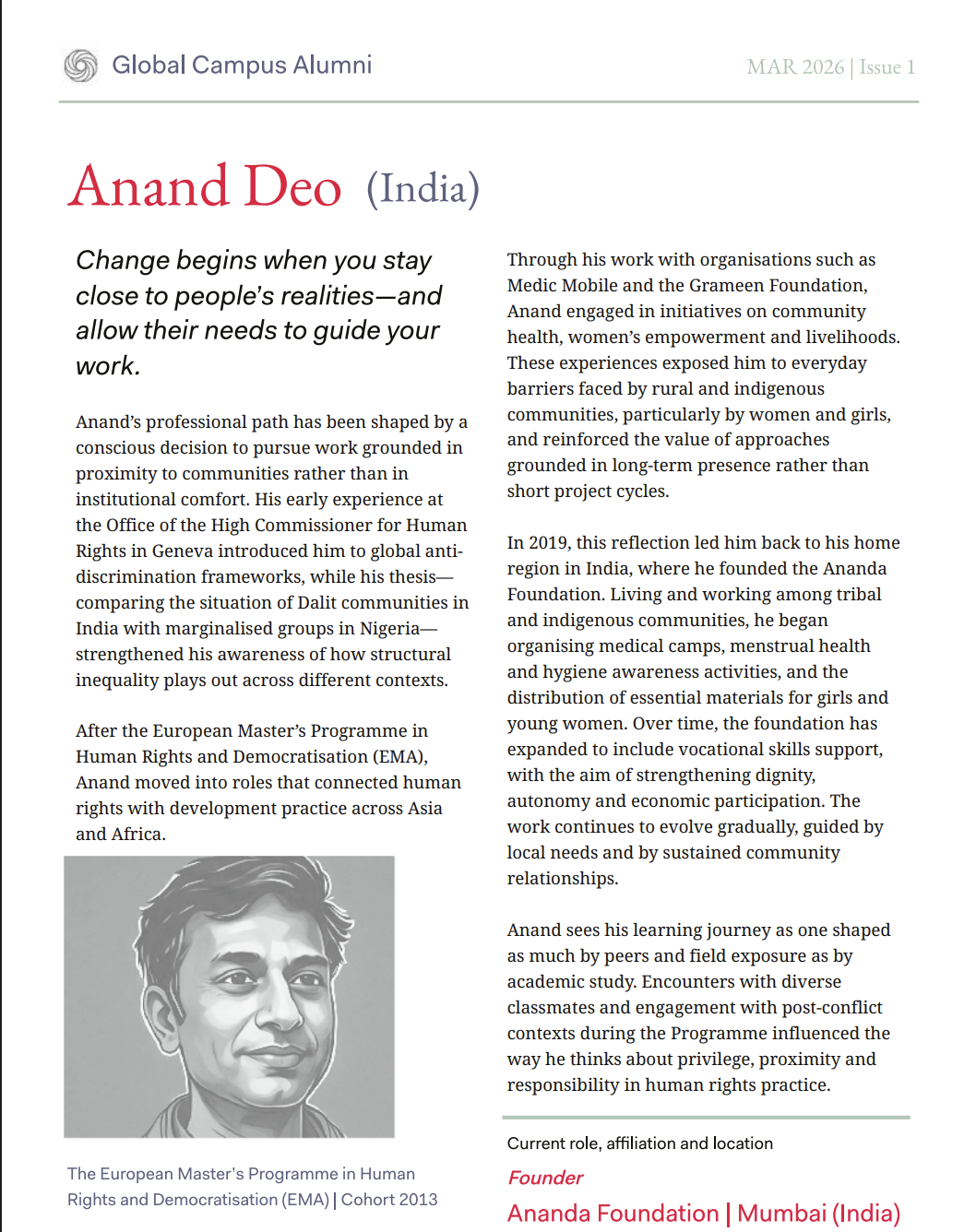
Anand Deo: "Change begins when you stay close to people's realities"
The European Master's Programme in Human Rights and Democratisation (EMA) featured Ananda Foundation's founder in the inaugural issue of its Global Campus Alumni Newsletter, published March 2026.
The profile documents Anand Deo's journey from his early work at the UN Office for Human Rights in Geneva through his roles with Medic Mobile and the Grameen Foundation, to his return to Bihar in 2019 and the founding of Ananda Foundation.
The newsletter highlighted his approach of grounding change in proximity to communities: "Change begins when you stay close to people's realities — and allow their needs to guide your work."
The feature drew attention to the foundation's evolution — from initial health camps and pad distribution to vocational training, organic farming and the planned pad manufacturing unit — as a model of slow-built, locally-rooted development that contrasts with short project-cycle approaches.